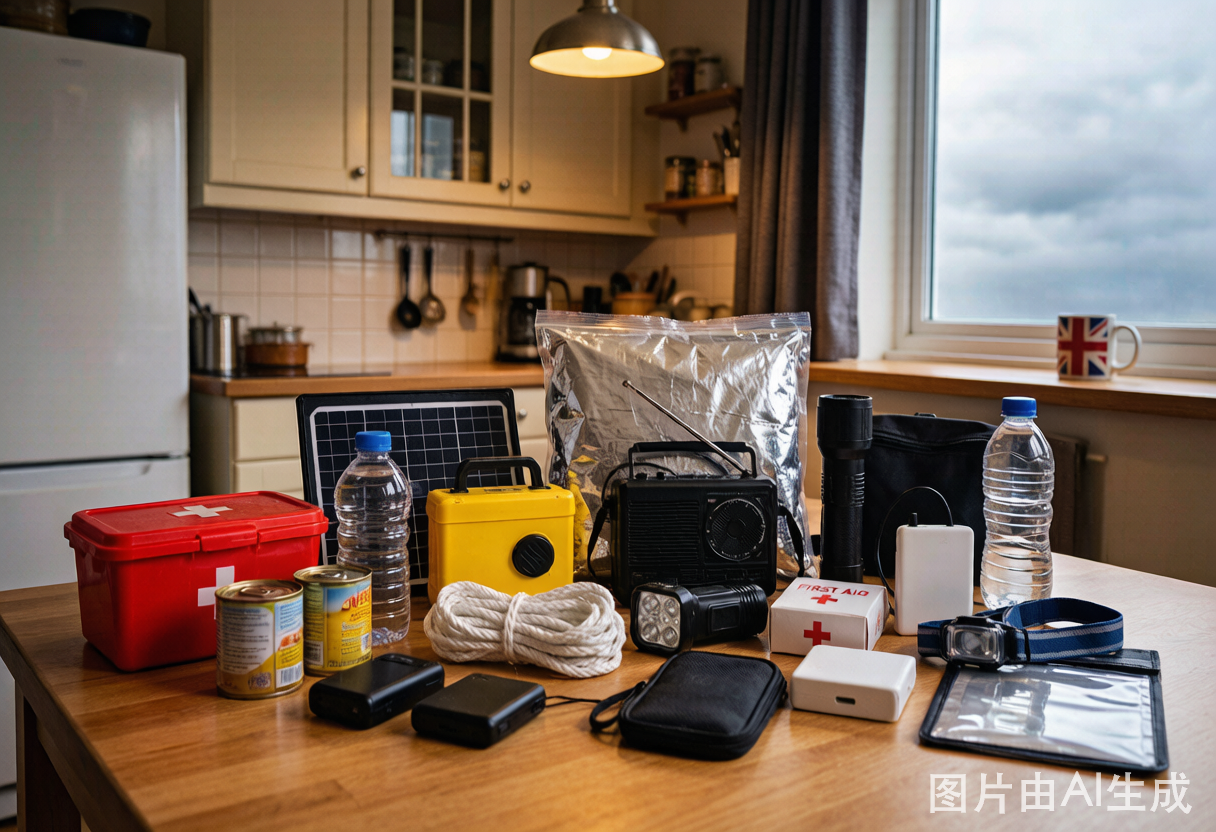
Why every UK household needs a survival kit
The UK experiences an average of 12 named storms per year, with flooding affecting over 5 million properties. Power cuts from severe weather are becoming more frequent — Storm Arwen in 2021 left 240,000 homes without power, some for over a week. A survival kit bridges the gap between when a disaster hits and when emergency services can reach you.
Unlike the US, the UK does not have a strong culture of emergency preparedness. But the fundamentals are the same: you need water, food, warmth, light, and communication for at least 72 hours. The UK government's Prepare for Emergencies guidance recommends every household maintain basic supplies.
This guide covers three types of survival kits available on Amazon UK: 72-hour home kits, car emergency kits, and compact grab bags. All products listed are available on Amazon.co.uk with UK delivery.
As an Amazon Associate, StormRift.net earns from qualifying purchases.
Useful gear for this stepBest 72-hour home survival kits on Amazon UK
1. LifeSaver Emergency Preparedness Kit — The most comprehensive 72-hour kit on Amazon UK. Includes water purification, food rations, first aid, thermal blankets, and a wind-up radio. Covers 2 people for 72 hours. Around £120-£150. Best overall for UK households.
2. BCB Adventure Survival Kit — A compact British-made kit with NATO-approved components. Includes fire starter, water purification tablets, emergency shelter, and first aid essentials. Around £60-£80. Best for quality-conscious buyers who want military-grade components.
3. Lifesystems Survival Pack — Another UK brand with a solid reputation. 40-piece kit covering shelter, warmth, first aid, and signalling. Around £45-£65. Best mid-range option from a trusted British outdoor brand.
4. Budget Build (Recommended) — Use our emergency kit checklist to assemble your own 72-hour kit on Amazon UK for £80-£120. You will get higher quality individual items than any pre-packed kit at the same price point.
Best car emergency kits on Amazon UK
UK roads present unique risks: winter ice, sudden flooding, and motorway breakdowns. The AA recommends every UK driver carry a car emergency kit from October to March. Here are the best options on Amazon UK:
1. AA Car Essentials Emergency Kit — The AA's own branded kit. Includes hi-vis vest, warning triangle, jump leads, torch, thermal blanket, and first aid kit. Around £35-£50. Best for brand trust and AA-backed quality.
2. Winter Car Kit (Deluxe) — Comprehensive winter breakdown kit with ice scraper, de-icer, shovel, thermal blankets, torch, and snacks. Around £40-£55. Best for UK winter driving conditions.
3. Compact Car Survival Kit — Minimalist kit with jump starter, tyre inflator, first aid, and emergency blanket. Around £30-£45. Best for smaller cars with limited boot space.
Legal note: While carrying an emergency kit is not a legal requirement in the UK (unlike France or Germany), it is strongly recommended by the AA, RAC, and UK government guidance.
Best compact grab bags and go bags on Amazon UK
A grab bag is a smaller, more portable version of a 72-hour kit — designed to be grabbed in under 60 seconds during an evacuation. Ideal for flood-prone areas, tower blocks, and anyone who needs to leave quickly.
1. Highlander 20L Grab Bag — Compact 20L bag pre-packed with 72-hour essentials for one person. Around £50-£70. Best for solo evacuation in urban UK environments.
2. Kombat UK 24-Hour Assault Pack — Smaller than a full bug out bag, designed for rapid deployment. Around £35-£50. Best for keeping by the front door or in the car boot.
3. Build Your Own Grab Bag — A 20-25L backpack with the 12 essentials from our bug out bag checklist. Around £60-£90 total. Best quality-to-price ratio and fully customised to your needs.
What should a UK survival kit include?
The core 10 items for any UK survival kit: water (3 litres per person per day), non-perishable food (72-hour supply), first aid kit, torch and spare batteries, wind-up or battery radio, thermal blankets, warm clothing layers, phone charger/power bank, whistle, and copies of important documents in a waterproof bag.
UK-specific additions: waterproof clothing (essential for UK weather), high-visibility vest, OS maps of your local area, any prescription medications (7-day supply minimum), and cash in small denominations (ATMs and card machines may be down during power cuts).
For families with children: add comfort items, children's medications, baby supplies if applicable, and activities to keep children occupied. For pet owners: add pet food, water, and a carrier or lead.
Home kit vs. car kit vs. grab bag — which do you need?
Home kit (72-hour): Every UK household should have one. Store it in an accessible location — under the stairs, in a hallway cupboard, or in the garage. This is your primary shelter-in-place kit for power cuts, storms, and flooding.
Car kit: Essential if you drive regularly, especially in winter or in rural areas. Store it in the boot year-round. UK weather can change rapidly, and motorway breakdowns in winter are genuinely dangerous without warm clothing and supplies.
Grab bag: Recommended if you live in a flood-risk area, a high-rise building, or anywhere you might need to evacuate quickly. Keep it by your front door or under your bed. Complements your home kit, not a replacement for it.
Our recommendation: start with a home kit, add a car kit if you drive, and add a grab bag if you are in a high-risk area. Total investment for all three: approximately £150-£250 on Amazon UK.
Maintaining your UK survival kit
Check your kit every 6 months. Replace expired food, water, and medications. Test torches and radios to ensure batteries work. Update documents if anything has changed (new insurance policy, new medication, new family member).
Seasonal rotation: swap summer items (sunscreen, insect repellent) for winter items (hand warmers, extra thermal layers) in October and back in April. UK weather demands seasonal adjustments that US-focused guides often miss.
Set a phone reminder for the first of April and first of October to review your kit. It takes 15 minutes and ensures your kit is always ready when you need it.
FAQ
What is the best survival kit on Amazon UK?
The LifeSaver Emergency Preparedness Kit (£120-£150) is the most comprehensive 72-hour kit on Amazon UK. For a British-made alternative, the BCB Adventure Survival Kit (£60-£80) offers military-grade components. For the best value, build your own using our checklist for £80-£120.
What should a UK survival kit include?
A UK survival kit should include: water (3L per person per day), 72-hour food supply, first aid kit, torch and batteries, wind-up radio, thermal blankets, warm clothing, power bank, whistle, and waterproof document copies. UK-specific additions include waterproof clothing, hi-vis vest, and cash in small denominations.
Is it worth buying a survival kit in the UK?
Yes. The UK experiences 12+ named storms per year, and flooding affects over 5 million properties. Storm Arwen left 240,000 homes without power, some for over a week. A £50-£150 survival kit provides essential supplies for the first 72 hours before emergency services can reach you.
How much does a good survival kit cost in the UK?
A good survival kit in the UK costs £50-£150. Budget kits start at £30-£50 for basic essentials. Mid-range kits at £60-£100 offer better quality components. Premium kits at £100-£150 include everything needed for 72 hours. Building your own from individual items typically costs £80-£120 with higher quality than pre-packed alternatives.
Do I need a separate car emergency kit in the UK?
Yes, if you drive regularly. UK winter conditions (ice, flooding, storms) make a car kit essential from October to March. The AA recommends carrying hi-vis vest, warning triangle, thermal blanket, torch, and first aid kit at minimum. A dedicated car kit costs £30-£55 on Amazon UK.