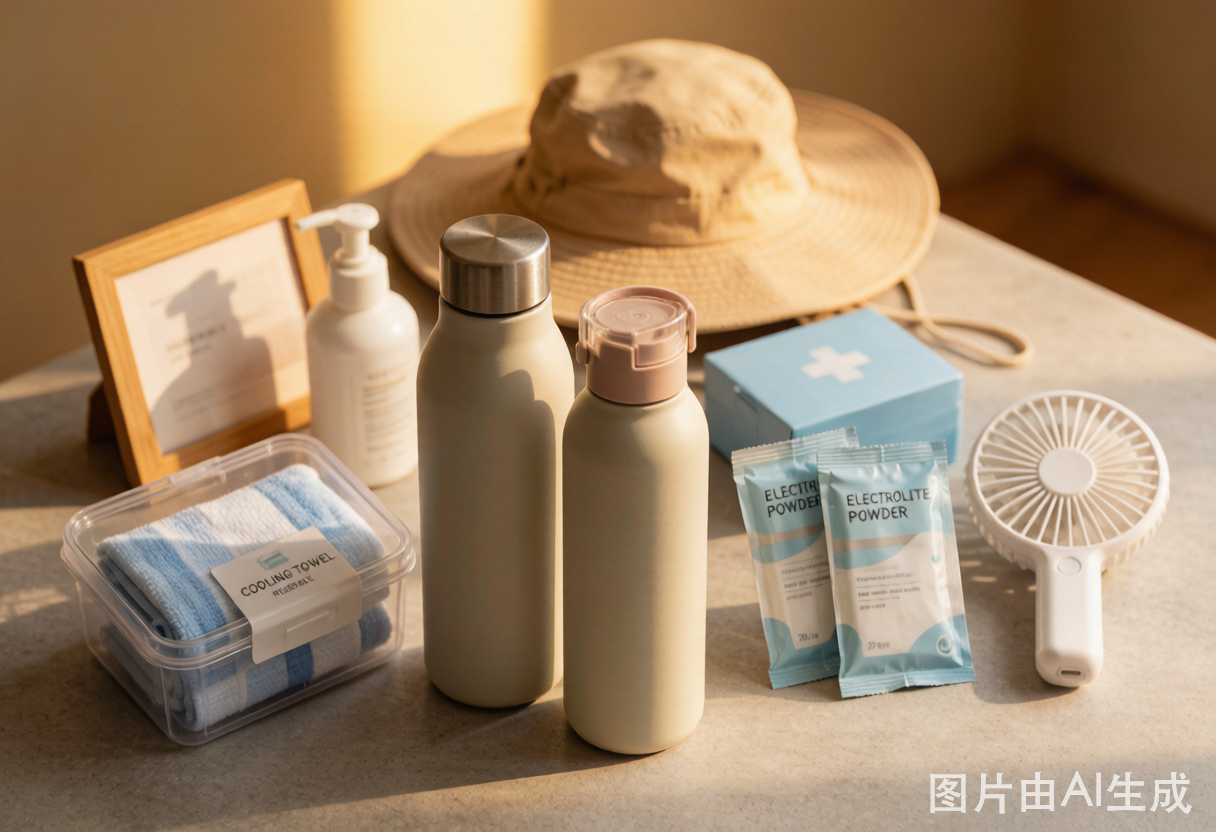
Why a heatwave needs its own kit
A general emergency kit covers basics like food, water, and first aid. But a heatwave presents a specific set of threats that a generic kit does not address: rapid dehydration, electrolyte imbalance, heat exhaustion, and heat stroke. These conditions can develop within hours and require specific tools to prevent and treat.
Heat is the leading weather-related cause of death in the United States, surpassing floods, tornadoes, and hurricanes combined. The 2003 European heatwave killed an estimated 70,000 people. The 2021 Pacific Northwest heat dome killed over 800 in one week. Most of those deaths occurred indoors, at home, among elderly people who lacked adequate cooling and hydration.
A heatwave emergency kit is not just supplies. It is a system: hydration to prevent dehydration, cooling gear to reduce body temperature, medical supplies to respond to heat illness, and a plan for vulnerable family members who may not recognize their own symptoms.
As an Amazon Associate, StormRift.net earns from qualifying purchases.
Useful gear for this stepWater and hydration essentials
Water is the single most critical item. The body can lose 1 to 2 liters of water per hour during heavy sweating in extreme heat. Store at least one gallon per person per day, and increase that amount if anyone is physically active, pregnant, nursing, or taking medications that increase fluid loss.
Plain water is necessary but not sufficient during prolonged heat exposure. Sweating drains electrolytes, primarily sodium, potassium, and magnesium. Without replacement, the body cannot retain water effectively, leading to muscle cramps, weakness, and confusion even when fluid intake seems adequate.
Stock electrolyte replacement packets or tablets. These are inexpensive, lightweight, and available at any pharmacy. Alternatively, keep a bottle of sports drink on hand, though electrolyte packets are more concentrated and have a longer shelf life. Avoid alcohol and caffeine, which increase fluid loss through urine and impair the body's heat response.
Cooling gear that actually works
A cooling towel is one of the most effective and affordable tools. These are made of a special fabric that retains water and stays cool through evaporation. Wet the towel, wring it out, and drape it around the neck or over the head. It can lower skin temperature by several degrees for 1 to 2 hours before needing to be re-wetted.
A spray bottle filled with cool water provides instant relief when misted on the face, arms, and neck. Combined with a fan, the evaporative effect is significantly stronger. Keep a spray bottle in every room where household members spend time during the day.
Battery-powered fans are essential if power fails. Look for models with adjustable speed and a clip or stand. A clip-on fan attached to a bed frame or chair provides targeted airflow without requiring wall power. Keep spare batteries or choose a model with USB charging that can run from a power bank.
Cold packs or gel packs are useful for targeted cooling of pulse points. Apply to the neck, wrists, armpits, or groin to lower core body temperature quickly. Do not apply frozen packs directly to bare skin. Wrap them in a cloth first.
Medications and health supplies
Heat changes how the body processes medications. Diuretics, blood pressure medications, antihistamines, antidepressants, and antipsychotics can all affect hydration, sweating, or temperature regulation. Keep a 7-day supply of all prescription medications in the kit, and store them below 25 C. Some medications degrade at high temperatures and lose effectiveness.
Include a thermometer to monitor room temperature and body temperature. A room thermometer tells you when indoor heat has reached dangerous levels. A body thermometer helps identify heat stroke, which is defined as a core body temperature above 40 C.
Add a basic first aid kit with bandages, antiseptic wipes, gauze, tape, pain relievers, and antihistamines. For heat-specific response, include oral rehydration salts, which are more concentrated than sports drinks and are used to treat severe dehydration. These are available at pharmacies and cost only a few dollars.
For vulnerable family members
Elderly family members are at the highest risk during a heatwave. Sweat production decreases with age, thirst sensation diminishes, and chronic conditions reduce the body's ability to regulate temperature. Create a specific plan for each elderly person in your household: identify the coolest room, set up a fan and cooling station, and check on them at least twice daily during heat advisories.
Children under 4 are also at elevated risk. Their bodies heat up faster than adults, and they cannot always communicate thirst or discomfort. Keep extra water, electrolyte drinks formulated for children, and a spray bottle for cooling. Never leave a child in a parked car, even for a few minutes. Car interiors can reach 50 C within 20 minutes on a 35-degree day.
Pets need water, shade, and cooling too. Dogs and cats do not sweat efficiently and rely on panting, which is less effective in high humidity. Keep a dedicated water bowl filled, provide a cool floor or damp towel to lie on, and never exercise dogs during peak heat hours. Brachycephalic breeds like pugs and bulldogs are especially vulnerable to heat stroke.
Budget build vs premium build
A basic heatwave kit can be assembled for under 25 dollars. Start with: a spray bottle (2 dollars), a cooling towel (8 dollars), a pack of electrolyte packets (6 dollars), a battery-powered fan (5 dollars), and a thermometer (3 dollars). This covers the essentials: hydration, body cooling, and temperature monitoring.
A mid-range kit for 50 to 75 dollars adds: a high-capacity power bank for phone charging and fan operation, a second cooling towel, a pack of cold gel packs, oral rehydration salts, and a first aid kit. This is sufficient for a family of four during a multi-day heatwave.
A premium kit for 100 to 150 dollars adds: a portable power station (200Wh minimum) for running fans and charging devices during outages, a HEPA air purifier for one room (useful when smoke accompanies heat), and a NOAA weather radio for emergency alerts. This level of preparation is appropriate for households with elderly members, infants, or medical device users.
Where to store and how to maintain
Store the heatwave kit in the coolest room of the house, away from direct sunlight and external walls. A bedroom closet on the north side of the building is ideal. Keep the kit in a labeled container so anyone in the household can find it quickly.
Check the kit at the start of heat season, typically May in most temperate climates. Replace expired electrolyte packets and medications. Test batteries in fans and thermometers. Recharge power banks. Verify that cooling towels are still in good condition, as they can degrade after extended storage.
Keep a smaller version of the kit in the car. A vehicle heatwave kit should include at least 2 liters of water, electrolyte packets, a cooling towel, and a sunshade for windows. Cars can become deadly environments within minutes during extreme heat, and having supplies on hand can prevent a dangerous situation during a breakdown or traffic delay.
FAQ
What should be in a heatwave emergency kit?
Water (1 gallon per person per day), electrolyte replacement packets, a cooling towel, spray bottle, battery-powered fan, cold packs, thermometer, first aid supplies, and a 7-day supply of prescription medications.
How much water do I need for a heatwave?
At least one gallon per person per day for drinking and basic sanitation. Increase the amount if anyone is physically active, pregnant, nursing, or taking medications that increase fluid loss. Active adults can lose 1 to 2 liters per hour in extreme heat.
What is the best cooling product for a heatwave?
A cooling towel is the most versatile and affordable option. It stays cool through evaporation for 1 to 2 hours, can be re-wetted indefinitely, and works around the neck or over the head. Combined with a spray bottle and fan, it provides effective body cooling for under 15 dollars.
How do I protect elderly family members during a heatwave?
Identify the coolest room, set up a fan and cooling station, check on them at least twice daily, ensure they are drinking water even if they do not feel thirsty, and review medications with a pharmacist for heat-related side effects.
Where should I keep my heatwave emergency kit?
Store it in the coolest room of the house, away from direct sunlight and external walls. A bedroom closet on the north side is ideal. Keep a smaller version in the car with water, electrolytes, and a cooling towel.