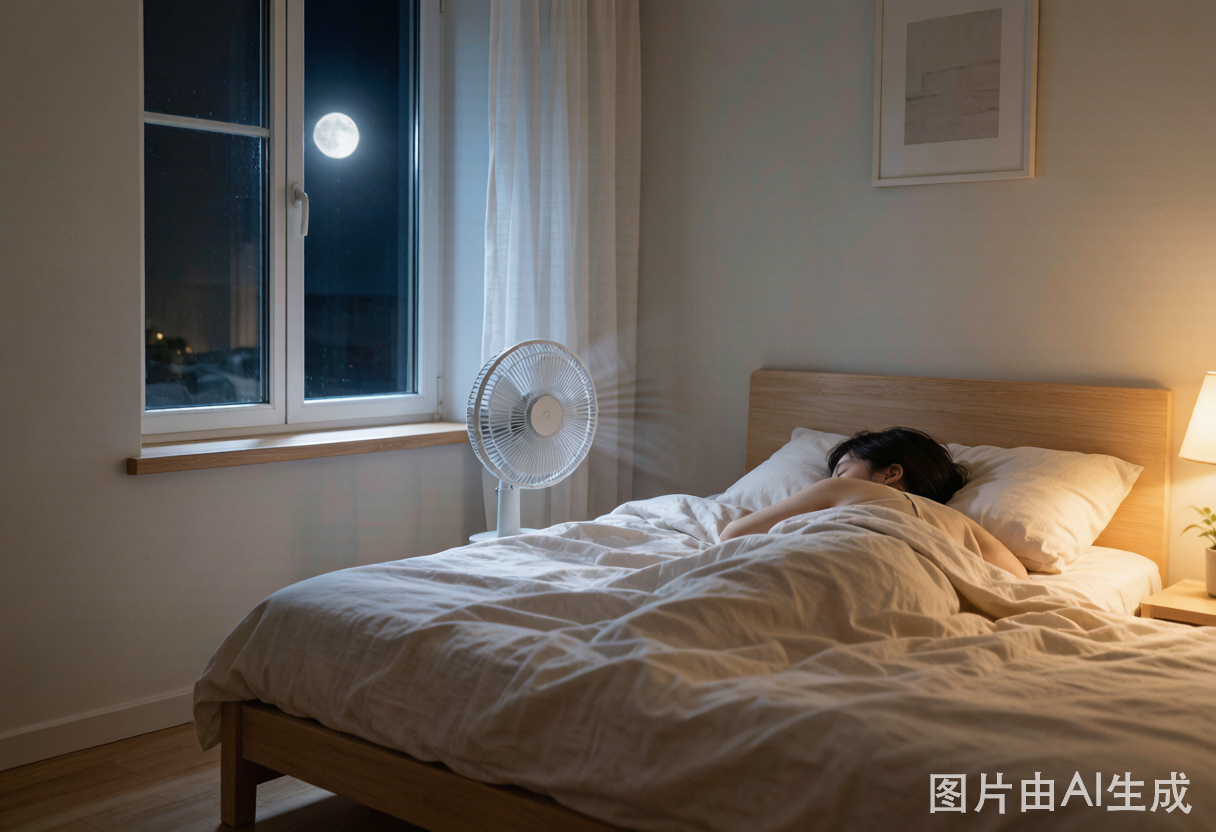
Why heat destroys sleep quality
The body's core temperature naturally drops by about 1 degree Celsius during the evening to initiate sleep. This temperature drop is one of the primary signals that triggers melatonin release and shifts the brain into sleep mode. When the ambient temperature is too high, the body cannot cool down enough to complete this transition, and sleep onset is delayed or disrupted.
Heat does not just make it harder to fall asleep. It also fragments sleep throughout the night. Studies show that nighttime temperatures above 24 C reduce deep sleep and REM sleep significantly. Deep sleep is when the body repairs tissue and consolidates memories. REM sleep is when the brain processes emotions and learning. Losing either stage means waking up tired even after 8 hours in bed.
The combination of sleep deprivation and heat stress is particularly dangerous for elderly people and those with cardiovascular conditions. Poor sleep impairs judgment, weakens immune response, and increases irritability. During multi-day heatwaves, accumulated sleep debt can push a person from uncomfortable to medically compromised.
As an Amazon Associate, StormRift.net earns from qualifying purchases.
Useful gear for this stepPre-cool the bedroom before sunset
The most effective sleep cooling strategy happens before you go to bed. Starting at sunset, when outdoor temperature drops below indoor temperature, open windows and run a fan to flush hot air out of the bedroom. Aim for 2 to 3 hours of active ventilation before bedtime. This pulls heat out of walls, furniture, and bedding, not just the air.
Close windows and curtains 30 minutes before you plan to sleep, once the room has reached its coolest point. The goal is to trap the cool air and prevent the room from reheating. If you sleep with windows open and the outdoor temperature is above 24 C, you are letting warm air back in and undoing the pre-cooling work.
If your bedroom has a ceiling fan, turn it on during the pre-cooling phase to circulate air, then switch it to low or off when you get into bed. Ceiling fans cool people, not rooms. Running a ceiling fan in an empty room wastes energy. But during pre-cooling, air circulation helps move hot air toward the open windows.
Bedding and sleepwear choices
Choose bedding made of breathable natural fibers. Cotton percale and linen are the best options for hot sleepers. Cotton percale has a crisp, cool feel and wicks moisture effectively. Linen is even more breathable and dries quickly, though it wrinkles easily. Avoid satin, polyester, and microfiber, which trap heat and moisture against the skin.
Use a single thin sheet or a cotton blanket instead of a duvet. If you cannot sleep without covers, a flat sheet alone provides the psychological comfort of being covered without trapping heat. Dampen the sheet slightly with cool water before bed. As the moisture evaporates during the night, it provides continuous cooling. This technique, called the Egyptian method, has been used for centuries in hot climates.
Sleepwear should be loose, lightweight, and made of cotton or linen. Avoid tight waistbands, heavy fabrics, and synthetic materials. If you normally sleep in pajama pants, switch to loose cotton shorts during a heatwave. Some people sleep better in minimal clothing or nothing at all during extreme heat. Choose whatever keeps your skin exposed to airflow.
Body temperature techniques
A lukewarm shower 30 to 60 minutes before bed helps lower core body temperature and signals to the body that it is time to sleep. Avoid cold showers, which can actually trigger a warming response as the body tries to conserve heat. Lukewarm water (around 33 C) cools the skin through evaporation after you step out, providing a gradual temperature drop that mimics the body's natural sleep signal.
Apply cold packs or a damp cloth to pulse points before bed. The wrists, neck, and ankles have blood vessels close to the surface. Cooling these areas for 5 to 10 minutes can lower body temperature by a small but meaningful amount. Remove the cold packs before falling asleep to avoid overcooling.
Hydrate steadily throughout the evening but reduce intake in the last hour before bed. Drinking a large glass of water right before sleeping leads to nighttime bathroom trips that disrupt sleep. Instead, sip water gradually throughout the evening. Add a small amount of electrolyte powder to your last glass to help the body retain fluid overnight.
Fan and airflow strategies
A fan aimed at the body is one of the simplest and most effective sleep cooling tools. Position it 1 to 2 meters from the bed, angled to create airflow across your skin without directly hitting your face. Direct face airflow can dry out eyes and sinuses, causing discomfort. A fan aimed at the chest or legs provides cooling without irritation.
The ice fan technique works at night too. Place a bowl of ice between the fan and the bed. The air picks up cold moisture from the ice and delivers a cooling breeze. This is most effective in a closed room where the cooled air stays concentrated. Replace the ice once during the night if you wake up.
If you have two fans, create cross-ventilation. Place one fan in a window pointing outward to exhaust warm air, and another fan in the room pointing toward the bed. This creates a continuous flow of cooler air from the hallway or another window through the bedroom. Close the door to concentrate the airflow.
What to avoid before bed in a heatwave
Avoid alcohol in the 2 hours before bed. Alcohol initially makes you feel drowsy, but it fragments sleep, increases sweating, and worsens dehydration. It also impairs the body's temperature regulation, making heat stress worse. If you drink during a heatwave, match every alcoholic drink with a glass of water.
Avoid heavy meals, especially protein-rich foods, within 3 hours of bedtime. Digestion generates metabolic heat. A large steak dinner can raise body temperature by 0.5 to 1 degree for several hours. Choose light, cool meals in the evening: salads, cold soups, fruit, and yogurt. These require less digestive energy and do not raise body temperature.
Avoid exercise within 3 hours of bedtime. Physical activity raises core body temperature and heart rate, both of which need to decrease for sleep onset. If you need to exercise during a heatwave, do it early in the morning before 8 AM. Evening exercise, even light exercise, delays sleep onset during hot weather.
When heat is too dangerous for sleep
If indoor temperature exceeds 32 C at night, passive cooling strategies are not sufficient for safe sleep, especially for elderly people, infants, and those with medical conditions. The body cannot cool itself fast enough in sustained heat above this threshold, and the risk of heat exhaustion rises with each hour of exposure.
If the bedroom cannot be cooled below 30 C, consider relocating for the night. Move to the lowest floor of the home, which is typically 2 to 5 degrees cooler. If that is still too hot, go to a designated cooling center, a 24-hour air-conditioned public space like a hospital lobby, or stay with a friend or family member who has air conditioning.
Watch for danger signs during nighttime heat. If someone wakes up confused, dizzy, or with a rapid heartbeat, they may be experiencing heat exhaustion. Check their temperature. If it is above 39 C, or if they have stopped sweating and have hot dry skin, this is heat stroke. Call emergency services immediately. Do not wait until morning to see if it improves.
FAQ
How can I stay cool while sleeping in a heatwave?
Pre-cool the bedroom with open windows and a fan for 2 to 3 hours before bed, then close windows. Use cotton or linen bedding, a single thin sheet, a fan aimed at your body, and the ice bowl technique. Take a lukewarm shower 30 minutes before bed.
What is the best sleeping position in hot weather?
Sleep in whatever position allows maximum skin exposure to airflow. The starfish position, lying on your back with arms and legs spread, maximizes body surface area for cooling. Avoid curling up, which traps heat. Use a thin pillow or no pillow to reduce head insulation.
Should I take a cold shower before bed in a heatwave?
No, take a lukewarm shower instead. Cold water triggers the body to conserve heat, which can make you warmer afterward. Lukewarm water cools the skin through evaporation after you step out, providing a gradual temperature drop that helps signal sleep.
What temperature is too hot for sleeping?
Nighttime indoor temperatures above 30 C are too hot for safe sleep, especially for elderly and medically vulnerable people. Above 32 C, the risk of heat illness rises sharply. If you cannot cool the bedroom below 30 C, consider relocating to a cooler location.
Do fans help you sleep in a heatwave?
Yes, when indoor air is below 35 C. Fans cool people through evaporation of sweat from the skin. Aim the fan at your body from 1 to 2 meters away. Above 35 C, fans circulate hot air and can increase heat stress. Use the ice bowl technique to cool the air the fan is moving.