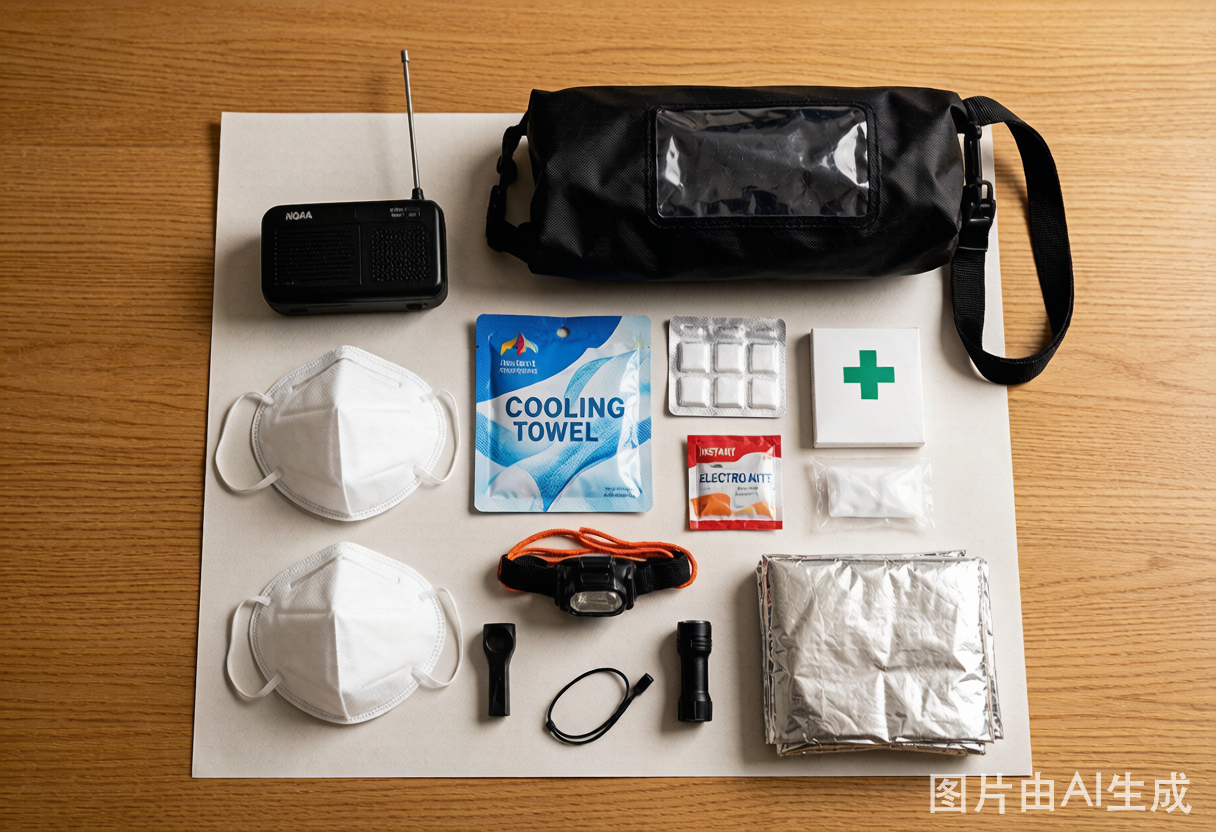
Why a weather-specific emergency kit matters
Standard emergency kits cover food, water, and first aid for 72 hours. But extreme weather creates hazards that generic kits do not address. During a heatwave, you need electrolytes and cooling tools. During wildfire smoke, you need N95 respirators and HEPA filtration. During a flood, you need waterproof storage for documents and electronics.
Climate data shows that extreme weather events are increasing in both frequency and severity. The United States experienced 28 billion-dollar weather disasters in 2023 alone, up from an average of 8 per year in the 1980s. A weather-specific kit is no longer optional preparation; it is basic household safety.
As an Amazon Associate, StormRift.net earns from qualifying purchases.
Useful gear for this stepThe 10 items every weather emergency kit needs
1. NOAA Weather Radio — Receives official alerts from National Weather Service transmitters without requiring cellular service or internet. Battery and hand-crank powered models work during total power outages. Essential for tornado warnings, flash flood alerts, and evacuation orders.
2. Thermal Emergency Blanket — Reflects 90% of body heat back to the wearer. Prevents hypothermia during winter power outages when heating systems fail. Compact enough to store in a car kit, bug out bag, or bedside drawer.
3. Rechargeable Headlamp — Hands-free lighting for sheltering, first aid, repairs, and night evacuation. During severe storms, power outages can last 24-72 hours. A headlamp is more useful than a flashlight because it keeps both hands free.
4. Waterproof Dry Bag — Protects identification, insurance documents, medications, cash, and electronics from flood water and heavy rain. Even a few inches of water can destroy a phone or passport. Dry bags cost $15-$25 and prevent thousands in losses.
5. Compact First Aid Kit — Treats cuts, burns, sprains, and basic wound care after storms, floods, or evacuation. Look for a kit with 100+ pieces in a waterproof case. Replace expired items annually.
6. Portable Water Filter — Removes bacteria and parasites from contaminated water during floods, boil-water advisories, or evacuation. A LifeStraw-style filter weighs 2 ounces and processes 1,000 gallons. Far more practical than storing 12 gallons of water.
7. N95 Respirator Pack — Filters PM2.5 particles from wildfire smoke, volcanic ash, and dust storms. Surgical masks and cloth coverings do not provide this protection. Stock 5-10 per household member for multi-day smoke events.
8. Evaporative Cooling Towel — Lowers body temperature through evaporation. Activate with water and place on the neck, armpits, or groin during heatwaves. Especially important for elderly family members who are at highest risk of heat illness.
9. Electrolyte Packets — Replace sodium, potassium, and magnesium lost through sweating during heatwaves or evacuation. Dehydration is the leading cause of heat exhaustion. Mix one packet per liter of water.
10. HEPA Air Purifier — Creates a clean-air room during wildfire smoke events. Run it in a sealed bedroom to maintain safe indoor PM2.5 levels even when outdoor air is hazardous. Look for a model rated for the square footage of your largest bedroom.
How to customize your kit by hazard type
For heatwaves: Add a battery-powered fan, extra electrolyte packets, and identify the coolest room in your home. Pre-position supplies there before the hottest part of the day. Check on elderly neighbors who are at 3x higher risk of heat death.
For floods: Add sand bags, a life jacket for each family member, and waterproof document storage. Keep your kit elevated (on a shelf, not the floor) in the highest livable level of your home. Know your evacuation route and never drive through flooded roads.
For winter storms: Add extra thermal blankets, hand warmers, a carbon monoxide detector (battery-powered), and non-perishable food that does not require cooking. Never use generators, grills, or gas ovens for indoor heating.
For wildfire smoke: Add plastic sheeting and duct tape to seal windows and doors, upgrade HVAC filters to MERV-13, and create a designated clean-air room with the HEPA purifier running continuously during smoke events.
For severe storms: Add a whistle for signaling, hard-soled shoes in your shelter area, and a bicycle helmet for each family member for tornado protection. Keep your kit in or near your designated storm shelter.
Where to buy weather emergency kit items
All 10 essential items are available on Amazon with Prime shipping. The total cost for a complete weather emergency kit is $200-$350 depending on the quality of items you choose. The HEPA air purifier is the most expensive single item at $150-$200; everything else costs under $40 per item.
Use our interactive checklist at /weather-emergency-kit-checklist to track your purchases. Check items off as you buy them, and your progress saves automatically in your browser. You can also print a PDF version to share with family members.
How to maintain your weather emergency kit
Check your kit twice a year. Set calendar reminders for March (spring severe weather season) and September (hurricane and wildfire season). Replace expired food and medications, test batteries, rotate stored water, and verify that all gear still functions.
Update seasonal items: swap summer cooling gear for winter warming gear and vice versa. Check that clothing still fits growing children. Update emergency contact lists and medical information cards.
After any weather event that required using your kit, inventory and replace used items within one week. A kit that is missing used items is not a kit; it is a reminder of what you used to have.
Cost breakdown: building a weather emergency kit on a budget
Phase 1 (Under $50): Emergency whistle, duct tape, paracord, fire starter, thermal blanket. These five items cover basic signaling, repair, and warmth for any scenario.
Phase 2 (Under $100 total): Add water filter, headlamp, and N95 respirator pack. These cover hydration, lighting, and air quality for multi-day events.
Phase 3 (Under $200 total): Add first aid kit, cooling towel, electrolyte packets, and dry bag. These cover medical, heat, and flood protection.
Phase 4 (Under $350 total): Add NOAA weather radio and HEPA air purifier. These complete the kit with official alert reception and clean-air room capability.
FAQ
What is a weather emergency kit?
A weather emergency kit is a collection of supplies specifically chosen for extreme weather events including heatwaves, floods, winter storms, wildfires, and severe thunderstorms. Unlike a general emergency kit, it includes weather-specific items like cooling towels, N95 respirators, NOAA weather radios, and HEPA air purifiers.
How much does a weather emergency kit cost?
A complete weather emergency kit costs $200-$350. You can start with 5 essential items for under $50 and build up over several months. The most expensive item is a HEPA air purifier ($150-$200); all other items cost under $40 each.
Do I need a weather radio if I have a smartphone?
Yes. Cell towers fail during severe weather, and phone batteries drain faster in extreme temperatures. A NOAA weather radio receives official alerts directly from National Weather Service transmitters without requiring cellular service, internet, or even electricity if you choose a hand-crank model.
What should I add for wildfire smoke?
Add N95 respirators (5-10 per person), a HEPA air purifier for a designated clean-air room, plastic sheeting and duct tape to seal windows, and upgrade your HVAC filter to MERV-13 or higher before fire season begins.
How often should I update my weather emergency kit?
Check your kit every 6 months. Set reminders for March and September. Replace expired food and medications, test all batteries, rotate stored water, update seasonal clothing, and verify that all gear still functions properly.