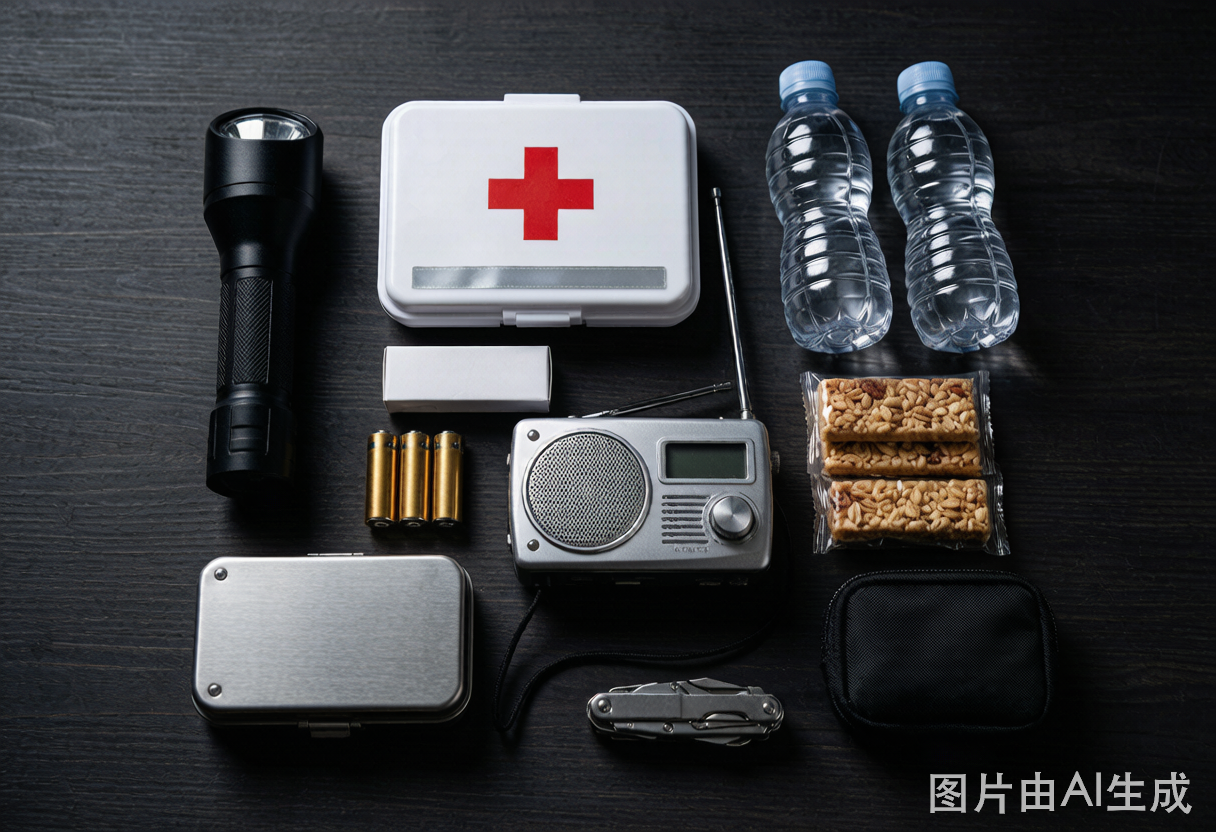
Why you need an emergency radio
The pattern is always the same. A storm knocks out power at 9 PM. Your phone has 40% battery, and by midnight the cell network is congested or down entirely. The outage map you checked earlier will not load. Is this a two-hour outage or a three-day one? Is another band of storms coming? Without information, you are guessing — and guessing wrong during a tornado outbreak or an ice storm has consequences.
In the United States, NOAA Weather Radio is the backbone of emergency information. The National Weather Service broadcasts continuous weather information and hazard alerts on seven dedicated channels. NOAA reported an estimated 95% US population coverage as of January 2026, while noting that actual reception depends on terrain, buildings, transmitter distance, and receiver quality. A radio with NOAA alert mode listens silently and sounds a loud alarm the moment a warning is issued for your area — including while you sleep. No app, no subscription, no cell signal required. NOAA Weather Radio network facts.
Every radio below has at least one off-grid power option. Product links open the listed Amazon marketplace, and eligible visitors may be redirected by Amazon OneLink.
As an Amazon Associate, StormRift.net earns from qualifying purchases.
How we evaluated
We compared each radio on four criteria: reception (especially NOAA channel clarity indoors), runtime across every power source the radio supports, portability, and everyday usability — because a radio too complicated to operate in the dark fails its only job. Our evaluation draws on manufacturer specifications, verified owner feedback, common failure patterns, and independent reviewer consensus — not on in-house lab testing. Product availability and price bands were re-verified in September 2026.
The 5 best emergency radios at a glance
| Product | Bands | Power sources | Price | Best for |
|---|---|---|---|---|
| 1. Midland ER310 | NOAA WX + AM/FM | Solar · crank · USB · 6×AA backup | ~$60–70 | Most households — the one to buy if you buy only one |
| 2. RunningSnail MD-090 | NOAA WX + AM/FM | Solar · crank · USB · 3×AAA backup | ~$25–36 | Equipping every room, car, and go-bag on a budget |
| 3. Kaito KA500 Voyager | NOAA WX + AM/FM + shortwave | Crank · solar · USB · AC · 3×AA | ~$50–60 | Long outages where you will crank daily |
| 4. Eton Sidekick | NOAA WX + AM/FM | Solar · crank · USB | ~$45–60 | Sunny climates and window-sill charging |
| 5. Tecsun PL-380 | FM + AM/MW + LW + full shortwave | USB 5V · 3×AA | ~$50–70 | Hearing outside broadcasts when local infrastructure fails |
As an Amazon Associate, StormRift.net earns from qualifying purchases. Prices are typical street prices and change frequently.
1. Best Overall: Midland ER310
NOAA WX + AM/FM · 2,600 mAh Li-ion · ~$60–70
The ER310 is the radio we would hand to a family member without instructions. The automatic NOAA alert is the feature that matters most: you do not have to remember to turn it on, because it turns itself on when it counts.
What we like
- NOAA weather scan with automatic alert — the radio wakes up and sounds a siren when the NWS issues a warning, even while it sits idle
- Four ways to power it: rechargeable 2,600 mAh battery, solar panel, hand crank, and 6 AA batteries as a final fallback
- Bright Cree LED flashlight with SOS beacon mode
- USB output charges a phone enough for emergency calls
- Backed by Midland's 3-year warranty — long for this category
What to know before buying
- No shortwave band — NOAA and AM/FM only
- Solar charging is slow; treat it as a trickle top-up, not a primary source
- Not waterproof — keep it in a zip bag in your kit
2. Best Budget: RunningSnail MD-090
NOAA WX + AM/FM · 2,000 mAh Li-ion · ~$25–36
At this price there is no excuse not to own two or three. It lacks the Midland's automatic alert, so pair it with wireless emergency alerts on your phone — but as an always-charged information source when the grid is down, it punches far above its price.
What we like
- Covers the essentials — NOAA channels, AM/FM, flashlight, reading lamp, SOS alarm — for half the price of the Midland
- Compact and light enough for a glovebox or backpack side pocket
- Hand crank plus solar means it never fully dies
- USB output for an emergency phone top-up
What to know before buying
- No automatic alert mode — you have to be listening to hear the warning
- Analog tuning is less precise than a digital display
- Smaller battery means shorter runtime between cranks
3. Best Hand Crank: Kaito KA500 Voyager
NOAA WX + AM/FM + shortwave · 600 mAh NiMH + AA option · ~$50–60
The KA500 is the radio for people who expect multi-day outages. The crank is geared well enough that a minute of turning buys real listening time, and the shortwave band keeps you informed even if every local station goes silent.
What we like
- Six power sources including a real AC adapter input — the most flexible charging in this lineup
- Adds shortwave bands, so you can hear broadcasts from outside your region when local stations are down
- Impact- and water-resistant housing survives being tossed in a kit
- Separate reading lamp, flashlight, and red SOS beacon
What to know before buying
- Bigger and heavier than the Midland or RunningSnail
- The internal NiMH battery is small — plan to use AA batteries or the crank for extended outages
- More controls means a steeper learning curve; practice before an emergency
4. Best Solar: Eton Sidekick
NOAA WX + AM/FM · 2,000 mAh Li-ion · ~$45–60
If outages in your area are often followed by clear skies, the Sidekick's solar panel can supplement USB or crank charging. Do not treat a small integrated panel as an unlimited or guaranteed power source.
What we like
- Integrated solar panel provides a supplemental charging option in suitable sunlight
- Slim, flat shape slides into a laptop sleeve or document pouch
- Digital display and simple controls — the easiest radio here for non-technical users
- USB phone charging and LED flashlight included
What to know before buying
- No battery backup compartment — solar, crank, and USB only
- Availability fluctuates; check current stock before relying on it as your primary pick
- Speaker is quieter than the Midland at maximum volume
5. Best Shortwave: Tecsun PL-380
FM + AM/MW + LW + full shortwave · 3×AA (NiMH rechargeable supported) · ~$50–70
Buy this as a second receiver, not your only emergency radio. Its replaceable batteries and shortwave coverage make it a useful option for listeners who also keep a separate local-alert radio.
What we like
- DSP receiver with genuinely excellent sensitivity for the price — pulls in weak distant stations other portables miss
- ETM auto-scan sweeps the band and stores strong stations in temporary memory in seconds
- 550 station memories, direct keypad frequency entry, and a backlit display
- Runs for days on three AA batteries — the most replaceable power source on earth
What to know before buying
- No NOAA weather band, no crank, no solar — this is a pure receiver, not an all-in-one survival tool
- No phone charging or flashlight
- Shortwave listening has a learning curve
What to look for in an emergency radio
NOAA alerts: non-negotiable in the US
If you live in the United States, NOAA Weather Radio reception is the one feature that is not optional. The next question is alert mode: radios like the Midland ER310 monitor the NOAA channel silently and sound a siren when a warning is issued. Cheaper radios receive the channels but only warn you if you happen to be listening. For overnight tornado season protection, automatic alert is worth paying for.
Hand crank vs. solar vs. USB: which power source matters most?
No single power source is sufficient. Cranks work at night and in any weather but require effort, and runtime per minute varies by model and conditions. Solar panels require suitable light and are slow, and useless during the multi-day cloudy stretches that follow many storms. USB charging is the fastest way to top up before a storm, but it depends on the grid or a pre-charged power bank. Disposable batteries (AA or AAA) are instantly replaceable and store for years — the strongest backup of all.
The practical answer: USB for convenience before the storm, crank or solar during it, and disposables as the final fallback. The best radios combine at least three sources; the Midland ER310 and Kaito KA500 each offer four or more.
Shortwave: who actually needs it
Shortwave stations broadcast across continents, so they keep working when every local station is dark. Most households can skip it. Consider shortwave if you live far from NOAA transmitters, spend time offshore or deep in the backcountry, or simply want an independent information source during a wide-area infrastructure failure. The Kaito KA500 includes it; the Tecsun PL-380 is built around it.
Phone charging is a bonus, not a reason to buy
Almost every crank radio advertises phone charging, and almost all of them deliver a partial top-up at best. A dedicated 20,000 mAh power bank charges a phone four or five times and costs less than the price difference between radio models. Buy the radio for its radio; keep a charged power bank in the same kit for your phone.
FAQ
Do I really need a NOAA weather radio if I have a smartphone?
A radio is a useful backup because phones depend on charged batteries and working networks. NOAA reported that its Weather Radio network covered an estimated 95% of the US population as of January 2026, although reception still depends on terrain, buildings, distance, and receiver quality. Test reception where you plan to use the radio.
How long does a hand crank radio actually run per minute of cranking?
There is no reliable universal runtime per minute of cranking. Output varies by model, battery condition, cranking speed, volume, and features in use. Treat the crank as a last-resort top-up and follow the manufacturer's instructions for the specific radio.
Can an emergency radio charge my phone?
Many emergency radios have a USB output for a limited phone top-up, but usable energy depends on conversion losses and the radio's remaining battery. Carry a dedicated power bank for planned phone backup and treat the radio's USB port as a last resort.
Do I need shortwave on an emergency radio?
For most households, no — NOAA and AM/FM cover local emergency information. Shortwave matters in two cases: you live in a rural area far from NOAA transmitters, or you want to hear international and distant broadcasts if regional infrastructure fails across a wide area. If either applies, the Kaito KA500 gives you shortwave plus everything else; the Tecsun PL-380 is the dedicated shortwave pick.
How should I store an emergency radio so it works when I need it?
Store it with the battery installed but check it every 3–6 months: power it on, verify reception, and recharge the internal battery fully. Lithium batteries self-discharge in storage, and a radio found dead during an outage is worse than no radio because you counted on it. Keep it somewhere you can reach in the dark, note it in your household emergency plan, and pair it with spare AA or AAA batteries if the model accepts them.
Evidence and editorial basis
Last reviewed: October 8, 2026
Product comparisons use published manufacturer specifications, current listing information, owner feedback, and independent reviewer consensus. StormRift did not conduct in-house lab tests.
Prices, specifications, sellers, and availability can change. Verify the current manufacturer documentation and listing before purchase.
As an Amazon Associate, StormRift.net earns from qualifying purchases. Links open the listed Amazon marketplace; Amazon OneLink may redirect eligible visitors to a supported local store. Product data was checked in September 2026 and can change.